
Obesity should be treated like any other chronic disease. Patients deserve access to evidence-based care, and a new federal Medicaid model means Massachusetts doesn’t fund that care alone. With the BALANCE model, Massachusetts pays only its defined portion for obesity treatment, not the full cost. So, with GLP-1s costing $245 per patient each month, Massachusetts pays approximately half of that amount, around $122.50 per patient, per month.
To look further into Massachusetts residents’ perspectives regarding obesity, in 2026, CCPA commissioned a study among 500 registered voters. Across party lines, Massachusetts voters overwhelmingly view obesity as a serious chronic disease that deserves medical treatment, strongly support efforts to help eligible patients access FDA-approved obesity medicines, and believe Medicaid should play a role in providing coverage. Specific findings include:
Obesity is a Major Public Health Concern
- Seven-in-ten Massachusetts voters (71%) see obesity as a serious problem in their state, with roughly one-in-five saying it is a very serious issue, and nearly two-thirds (67%) reporting a personal connection to obesity.
- Roughly seven-in-ten Massachusetts voters (71%) agree obesity deserves the same coverage as other chronic diseases, with more than two-in-five strongly agreeing (42%).
Voters Want Patients to Have Access to Treatment
- Most voters agree all residents, regardless of income or socioeconomic status, should have equal access to obesity medicines (80%) and believe doctors should drive decision-making (80%).
- Four-in-five Massachusetts voters (80%) are deeply concerned that some patients are unable to access FDA-approved obesity treatments their doctors recommend because their state Medicaid program does not cover them.
- Three-in-five Massachusetts voters (60%) view obesity as a chronic disease that should be treated with obesity medicines – not simply a matter of personal and lifestyle changes (40%).
- Massachusetts voters reject cost-based arguments against coverage. Three-in-five (62%) believe Medicaid coverage for obesity medicines is an investment in long-term health that prevents costly complications and reduces healthcare costs, rather than viewing medicines as too expensive for Medicaid to cover (24%).
- Underscoring the importance of access, four-in-five voters in Massachusetts (81%) recognize the importance of obesity treatment for communities that face higher rates of chronic diseases and agree that Medicaid coverage of obesity medicines would help improve lives and lead to better health outcomes (80%).
Medicaid Has a Responsibility to Help Provide Access
- Most Massachusetts voters (79%) think it is important for policymakers to restore access to obesity medicines in their state.
- Most Massachusetts voters also support policies that would broaden access for low-income patients – including establishing a program in their state (81%) or expanding Medicaid eligibility (79%) – to ensure they have access to obesity medications.
- The majority of Massachusetts voters (79%) support their state’s Medicaid program restoring FDA-approved obesity treatments for eligible patients.
- Support for state Medicaid coverage of obesity treatments is strong across party, with majorities of Democrats (86%), Independents (71%), and Republicans (82%) in Massachusetts backing this coverage.
Massachusetts Voters Reward Policymakers Who Support Medicaid Coverage of Obesity Medicines
- 75% of Massachusetts voters say they are more likely to support legislators who back Medicaid restoring obesity medicine coverage, versus just 11% who say less likely.
- Democrats (83%), Independents (68%), and Republicans (75%) in Massachusetts are more likely to support lawmakers who back Medicaid coverage of FDA-approved obesity medications.
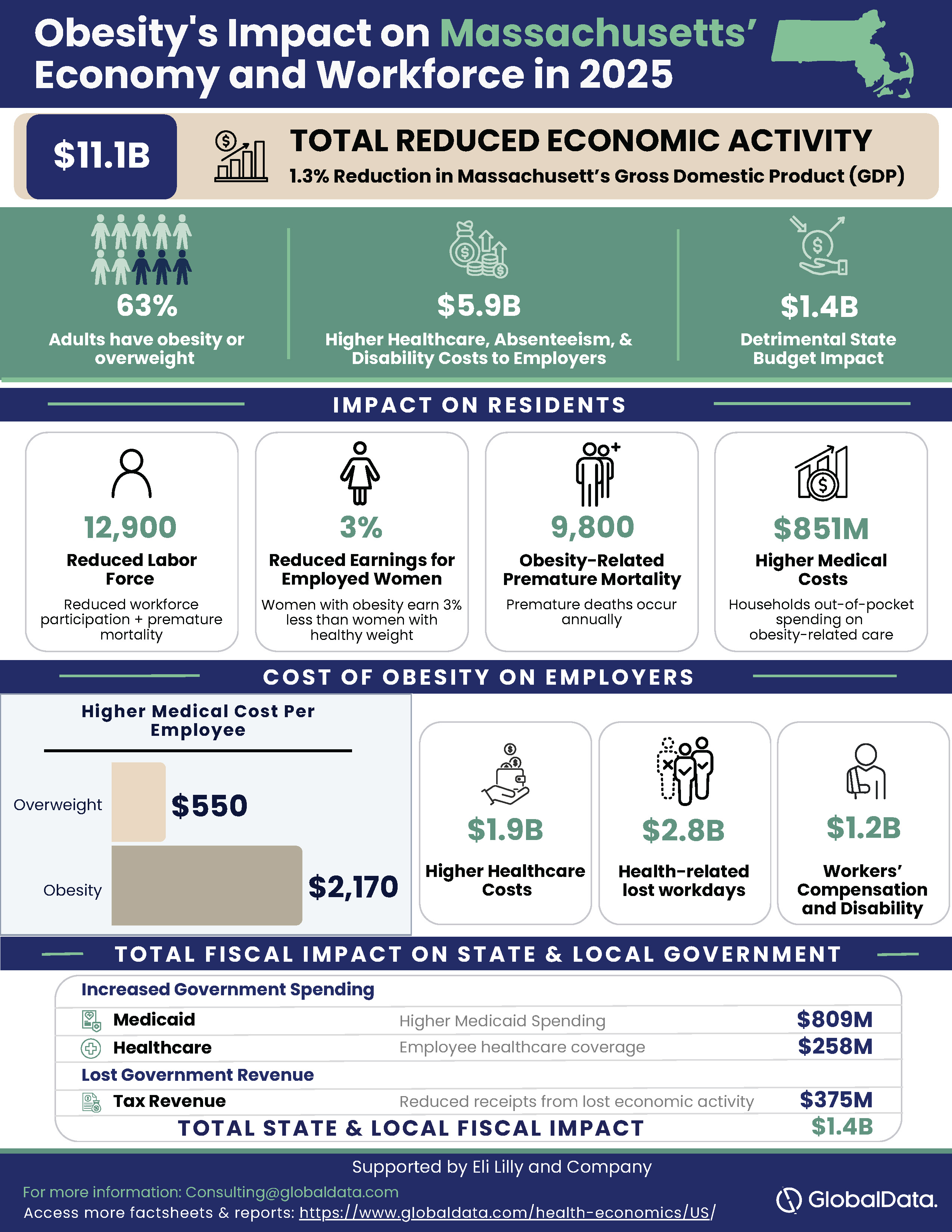
DOWNLOAD OBESITY’S IMPACT ON MASSACHUSETTS INFOGRAPHIC
Click on an image below to enlarge
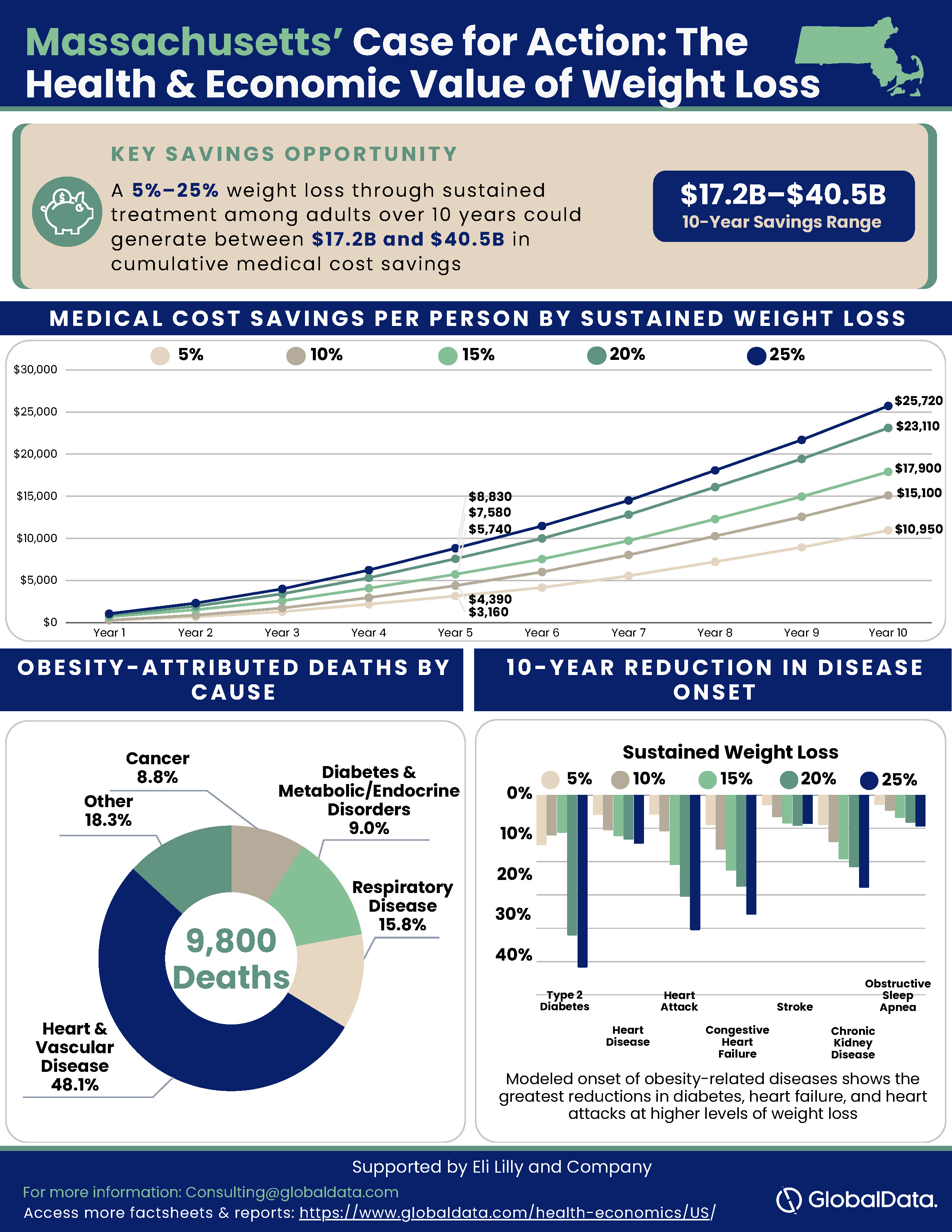
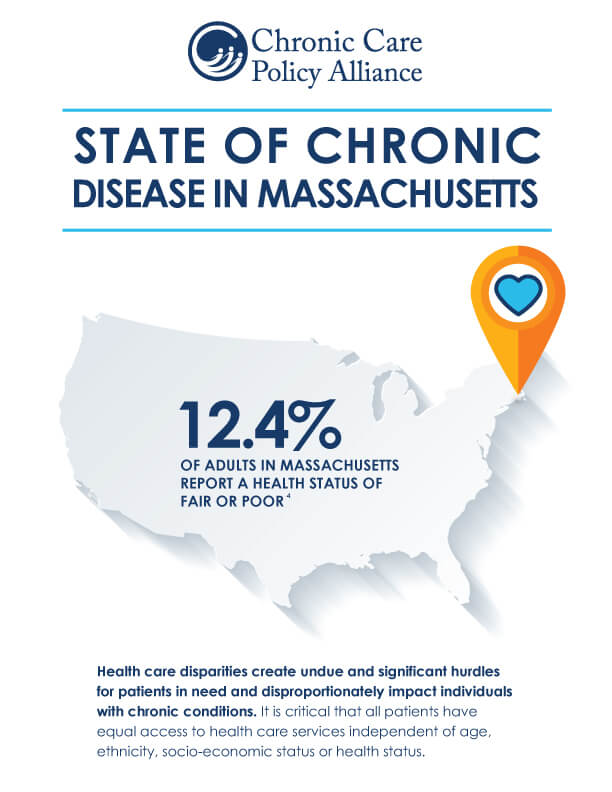
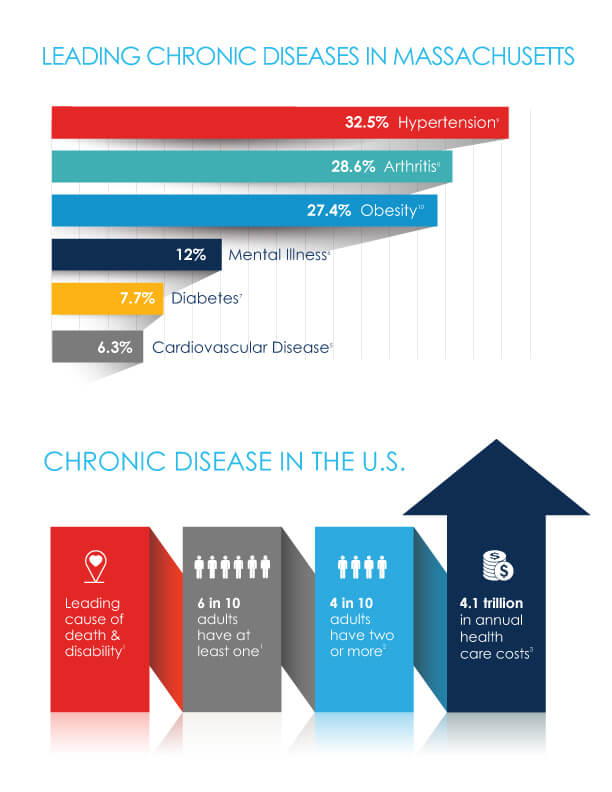
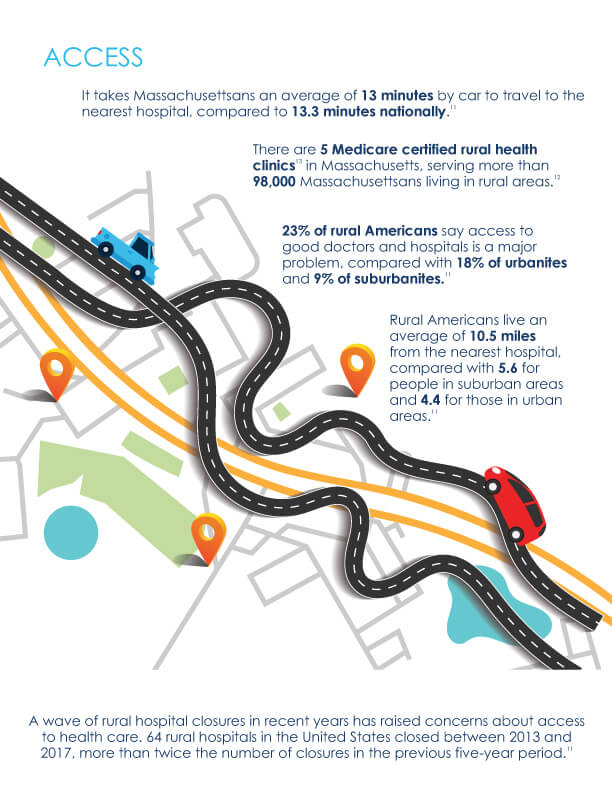
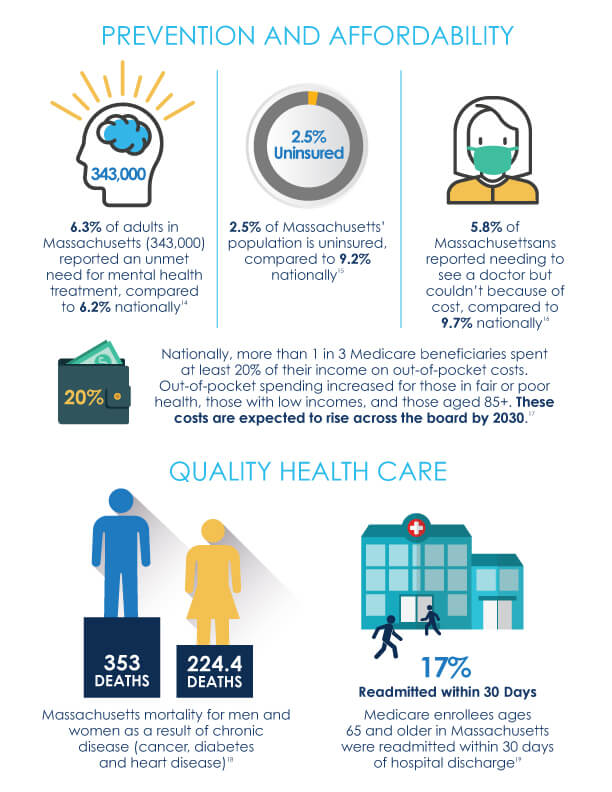
DOWNLOAD STATE OF CHRONIC DISEASE INFOGRAPHIC
Click on an image below to enlarge