

Missed the webinar or want to share it with a colleague, caregiver, or advocate? Watch the full recording here.
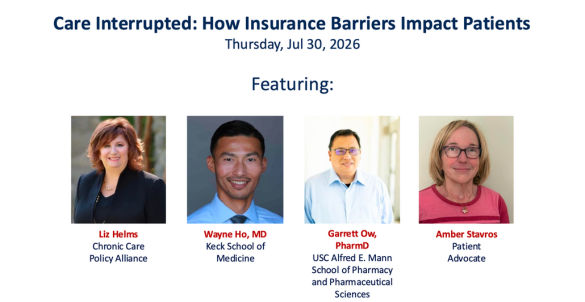
On July 30, the Chronic Care Policy Alliance (CCPA) hosted Care Interrupted: How Insurance Barriers Impact Patients, exploring how prior authorization requirements, coverage denials, step therapy, pharmacy benefit manager (PBM) practices, and non-medical switching continue to create obstacles for patients seeking medically necessary care.
Joining moderator Liz Helms, CEO of CCPA, were Dr. Wayne Ho, internal medicine and obesity specialist and professor at the Keck School of Medicine of USC; Garrett Ow, PharmD, clinical pharmacist at the USC Alfred E. Mann School of Pharmacy and Pharmaceutical Sciences; and patient advocate Amber Stavros.
Insurance Decisions Often Override Medical Decisions
One of the central themes of the discussion was the growing disconnect between clinical decision-making and insurance coverage requirements. Dr. Ho described how patients and providers are often forced to navigate an ever-changing set of coverage rules, prior authorization requirements, and administrative hurdles simply to access medications that have already been determined to be medically appropriate.
The Real-Life Consequences of Delays and Denials
Amber Stavros brought a powerful patient perspective to the conversation, highlighting the emotional toll that coverage denials and treatment delays can have on individuals already managing chronic illnesses, recounting a time where an insurer told her she would have to wait longer for treatment because, “she’s not the only Amber.”
Stavros encouraged patients not to face these challenges alone. She emphasized that organizations such as CCPA, MyPatientRights.org, and disease-specific advocacy groups can help patients understand their rights, navigate appeals processes, and find resources when coverage issues arise.
Understanding Prior Authorization, Step Therapy, and Non-Medical Switching
The panelists explained that step therapy, often referred to as “fail first,” can require patients to try and fail on one or more insurer-preferred medications before getting access to the treatment originally prescribed by their physician.
The panel also discussed non-medical switching, in which patients who are stable on a medication may be required to switch treatments because of formulary or coverage changes rather than clinical need.
The Role of PBMs and Biosimilars
Pharmacist, Garrett Ow, helped attendees better understand the role of pharmacy benefit managers (PBMs) in determining medication access, formulary placement, and coverage decisions.
Ow explained the differences between biologics and biosimilars and discussed how insurance-related policies can sometimes influence treatment decisions.
Advocacy and Policy Reform Remain Critical
Moderator Liz Helms encouraged attendees to remain engaged in advocacy efforts and reminded participants that sharing their experiences can help policymakers better understand the real-world impact of insurance barriers to care.
Her advice to patients was both practical and empowering: don’t be afraid to speak up for yourself. Patients and caregivers should seek out organizations that can provide guidance, support, and advocacy when they encounter unnecessary obstacles to care.
Every patient deserves timely access to medically necessary treatment and the ability to focus on their health rather than fighting administrative roadblocks.
Watch the recording HERE
To receive invites for our upcoming webinars, sign up for our newsletter HERE.