

Missed the webinar or want to share it with a colleague, caregiver, or advocate? Watch the full recording here or share this link!
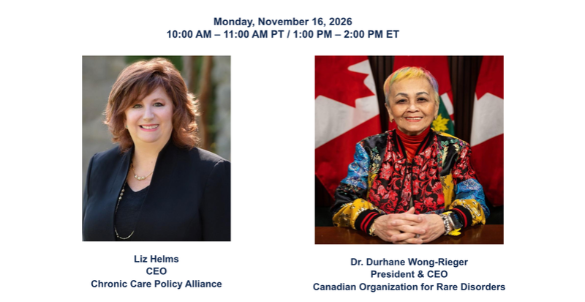
On November 16, 2026, the Chronic Care Policy Alliance (CCPA) hosted a fireside chat between Liz Helms, CEO of CCPA, and Dr. Durhane Wong-Rieger, President and CEO of Canadian Organization for Rare Disorders. Together, they discussed common misconceptions about Canada’s healthcare system, the potential impact of U.S. drug pricing reforms on patients in both countries, and why patient voices must remain central to healthcare decision-making.
Universal Healthcare Doesn’t Mean Unlimited Access
One of the central themes of the discussion was the difference between healthcare coverage and healthcare access. While Canada provides universal healthcare coverage, Dr. Wong-Rieger explained that prescription medications are not fully included in the country’s public healthcare system, and access to innovative therapies can vary significantly depending on whether a patient has private or public drug coverage. Canadians often face lengthy delays before gaining access to new therapies, and some treatments available in the United States may never become available in Canada.
As Dr. Wong-Rieger noted, “the broader you spread it, the thinner it gets,” highlighting the difficult tradeoffs policymakers face when attempting to stretch limited healthcare resources.
Drug Pricing Policies Have Global Consequences
Next, Liz and Dr. Wong-Rieger discussed ongoing efforts to reduce prescription medication costs. They also discussed the GLOBE Model and other Most Favored Nation (MFN)-style approaches that tie U.S. drug prices to prices paid in other countries.
While affordability remains a critical goal, Dr. Wong-Rieger cautioned that policies designed primarily to lower prices can have unintended consequences for patients. Speaking about Canada’s role in the global healthcare ecosystem, she observed that “we’re just buyers,” noting that, while Canada develops some of the most innovative treatments in the world, they rely heavily on medical innovation developed elsewhere, particularly in the U.S.
Patients Need a Seat at the Table
Throughout the webinar, Helms and Dr. Wong-Rieger repeatedly returned to a common theme: patients are too often excluded from major healthcare policy decisions. Whether discussing drug pricing negotiations, coverage decisions, or access to innovative therapies, both advocates stressed that patients bring real-world perspectives that policymakers, insurers, and other stakeholders cannot provide on their own.
Dr. Wong-Rieger also highlighted a key difference between the U.S. and Canadian political systems. In the U.S., constituents often have a more direct relationship with elected representatives, giving patients and advocates meaningful opportunities to educate and advocate for changes to policy. By contrast, individual Members of Parliament generally have less direct accountability to constituents than members of Congress. They are accountable to their party, and patient advocates must first advocate with the party.
Her message to American advocates was clear: use the tools available to you, engage policymakers, and make your voice heard.
Transparency Matters Because Lives Are at Stake
Another theme that emerged throughout the discussion was the need for greater transparency in healthcare decision-making.
From pricing negotiations and coverage determinations to cost-effectiveness assessments and access restrictions, many decisions that directly affect patients occur with limited public visibility. Dr. Wong-Rieger argued that healthcare systems should strive to be as transparent as possible because people’s lives are ultimately at stake.
Looking Beyond Drug Prices
The conversation also explored broader healthcare system challenges, including the role of pharmacy benefit managers (PBMs), rising insurance premiums, and the need to evaluate healthcare policies through the lens of the entire patient journey rather than medication prices alone.
Helms noted that patients continue to face growing barriers to care even as policymakers pursue cost-containment strategies. Dr. Wong-Rieger added that discussions about affordability should also consider access to specialists, clinical trials, support services, education, and treatment infrastructure, all of which contribute to successful patient outcomes.
While healthcare systems in the United States and Canada differ in many ways, the webinar made one point clear: patients on both sides of the border share many of the same goals. Ensuring access to innovative treatments, improving affordability, and elevating the patient voice will require collaboration, transparency, and thoughtful policymaking that keeps patients at the center of every decision.
Watch the recording HERE.
Sign up HERE to receive invitations to future CCPA webinars and events, sign up for the organization’s newsletter and stay engaged in the conversations shaping healthcare policy and patient access.